Is Social Media Harming Your Relationship with Food?
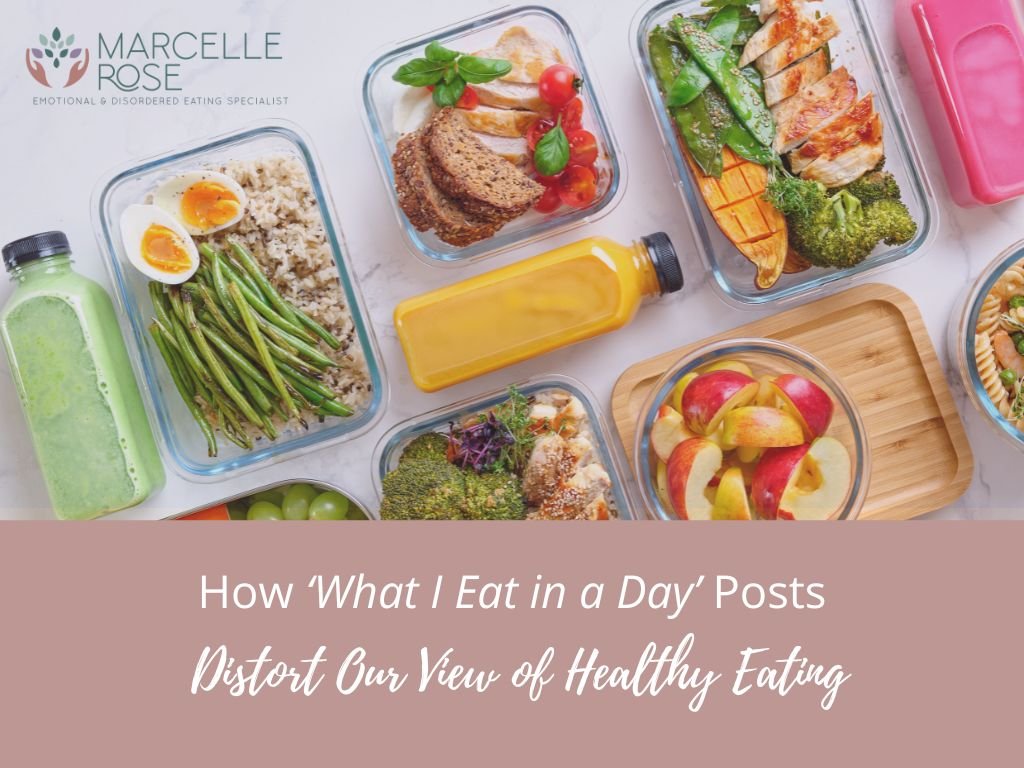
In today’s world of social media, we’re bombarded with influencers, celebrities and self-proclaimed “experts” sharing the details of their daily food intake.
Sometimes directly, sometimes through an underlying message, we’re encouraged to eat like them if we want to look like them, be as healthy as them or achieve their version of wellness.
While I’m always interested in food inspiration and recipe ideas, this narrative can be problematic, particularly for young people growing up with the pervasive influence of social media, or anyone who struggles with their relationship with food and their body.
When Food Inspiration Becomes Food Comparison
On TikTok and Instagram, “What I Eat in a Day” videos give us a carefully edited glimpse of someone else’s eating habits. While some offer enjoyable food inspiration, others carry an underlying message: eat like me and you can look like me. But a short video cannot tell us whether someone is eating enough, how they feel around food, or what else is happening in their life.
A more recent example is the rise of “SkinnyTok”, where content celebrating thinness and restrictive eating was presented as motivation and self-discipline. Concerns led TikTok to block searches for the hashtag in June 2025. However, removing a hashtag does not remove the wider message that a smaller body is something we should all be striving for.
And these messages aren’t always so obvious. They can appear in an beautifully edited “healthy lifestyle” routine that makes someone else’s way of eating look like a set of rules we should follow. You might start watching for meal ideas and find yourself questioning whether you’ve eaten too much, whether your lunch was “healthy enough”, or whether you should be cutting out foods you enjoy.
What concerns me is how easily food inspiration can become another measure by which we judge ourselves. We cannot assess someone’s health by their appearance, and we cannot know their relationship with food from what they choose to share online. Their food plan is not a prescription for what you should eat, and copying their meals will not give you their body.
Research is beginning to explore this more closely. A 2025 study involving 78 women found that watching “What I Eat in a Day” videos featuring images emphasising thin or muscular bodies led to greater body dissatisfaction and lower intentions to eat than watching food videos without these body images. The study looked at immediate responses, rather than longer-term eating habits, but it raises an important question: are we looking for meal ideas, or being encouraged to compare our bodies too?
What works for one person will not necessarily work for another. We all have different needs, a different health history, genetics, circumstances and preferences. We also have our own food history and relationship with our body. None of this can be accounted for in someone else’s social media post.
What could this mean for those constantly absorbing these messages?
Not every food video is harmful. But it’s worth noticing how the content you watch influences your thoughts about food and how you feel about yourself.
Myths and misconceptions about food
Social media gives us access to carefully selected, picture-perfect versions of other people’s lives. When the same messages about food, portion sizes and eating routines appear repeatedly, they can feel like expert advice, that should be followed by the book.
You might start believing that certain foods should always be avoided, that you shouldn’t need snacks, or that eating “well” means following a strict routine. Yet seeing a rule repeated online does not make it appropriate for your needs.
Anxiety, guilt and shame
If you already find your relationship with food difficult, someone else’s food diary can become another source of pressure.
Perhaps you feel guilty because you ate more than the person in the video, or anxious because you enjoyed a food they described as “bad”. A meal you were perfectly happy with can become something you need to question or justify.
Comparison and self-doubt
It’s easy to compare your own eating habits, body and lifestyle with what you see online, particularly when the person sharing appears happy, confident and healthy.
You may find yourself thinking, “Why don’t I have their willpower?” or “What am I doing wrong?”
But you are comparing your full experience with a small, selected part of theirs. You cannot see everything they eat, how flexible their habits are, or how they feel when the camera is off.
More rules and less trust in yourself
When you’re constantly looking outside yourself for guidance on what and how much to eat, it can become harder to give your own needs a voice.
Instead of considering your hunger, satisfaction, energy levels or the practical demands of your day, you may find yourself trying to follow someone else’s rules. Food can begin to take up more headspace, and eating can feel increasingly complicated.
What can you do about it?
Notice how the content makes you feel
After watching a food video, ask yourself: “Do I feel inspired and comfortable, or guilty, anxious and less confident about my own eating?”
If an account repeatedly leaves you questioning your food choices or feeling worse about your body, that is a good enough reason to mute, block or unfollow it.
Look at what is being promoted
Is the creator sharing a recipe, selling a supplement or encouraging you to follow a particular eating plan? Are they suggesting that their appearance proves their advice works?
A large following or an appealing video does not mean someone has the qualifications to make their advice suitable for you.
Create a more supportive feed
Consider following creators of different body sizes, ages, races and genders who promote body respect, flexible eating and a non-diet approach.
You may also find it helpful to include more content that has nothing to do with food or appearance. Your interests, relationships and enjoyment of life deserve space in your feed too. ( And if you’re anything like me, a few cat videos will do far more to brighten your day than someone else’s meal plan!)
Bring the focus back to your own needs
You can enjoy a recipe without adopting the creator’s entire way of eating. You can try a meal idea and adjust it to suit your appetite, preferences and circumstances.
Someone else’s “What I Eat in a Day” does not need to become your “What I Should Eat in a Day”.
There is no one-size-fits-all approach to food. You deserve to eat in a way that nourishes you, fits your life and allows for flexibility and enjoyment, without measuring yourself against someone else’s social media feed.
If you need help with focusing on what foods feel good in your body and what your body needs, you can download my Breaking the Cycle Toolkit for FREE, which includes key steps designed to help you reconnect with your appetite cues and begin taking small, practical steps toward food freedom.
Want to take a deeper dive? Explore my best-selling book 📕 The Binge Freedom Method: Your Four Pillar Plan to Beat Emotional Eating for Good, where I share strategies, tools and insights to help you understand your patterns and take back control of your eating habits.