Seven Steps to Calm Your Chocolate Cravings this Easter
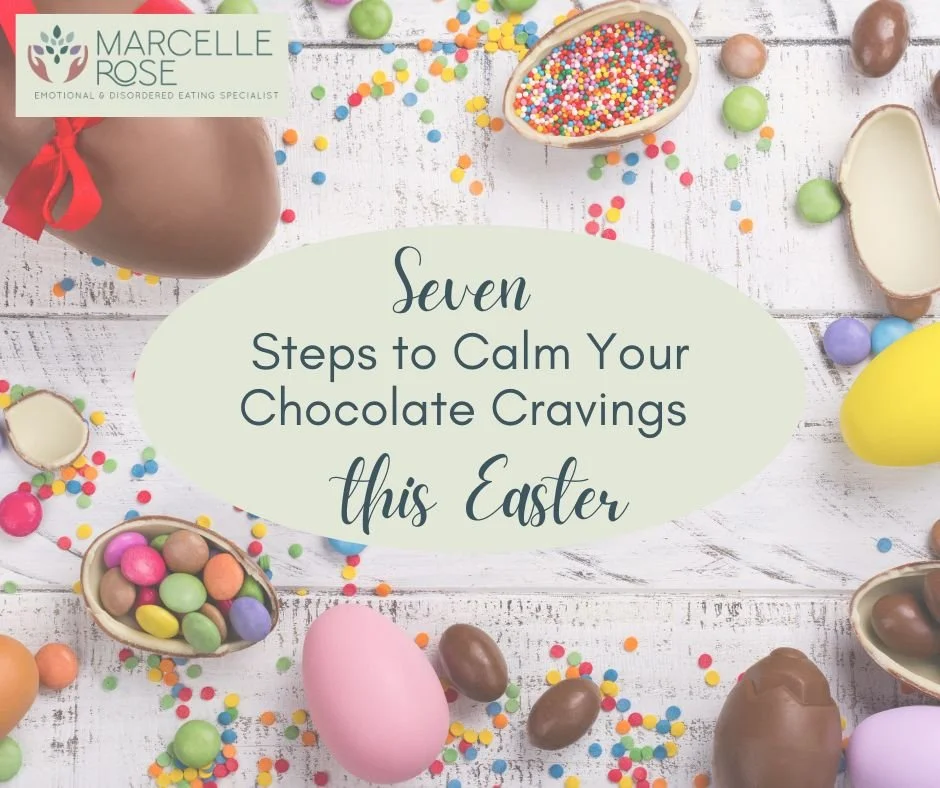
If you find yourself constantly thinking about food or worrying about what you shouldn’t be eating, Easter can feel like a minefield. The latest varieties of easter eggs and chocolate offerings are everywhere and possibly at home too, even if it’s not something you usually keep around.
Of course, chocolate is available all year round. But in my work with hundreds of women who struggle with their relationship with food, I’ve noticed that Easter (along with Christmas) often ramps up anxiety around so-called “forbidden” foods.
The good news? It doesn’t have to be this way.
Here are 7 useful strategies to help you feel more balanced and in control, not just around Easter, but anytime you feel overwhelmed by cravings or guilt around food:
1. Choose Quality Over Quantity
If you like dark chocolate, it might be worth choosing that over milk or white. Chocolate with a higher cocoa content typically causes a smaller blood sugar spike, which means fewer cravings later on. Plus, it contains more of cocoa’s natural benefits (more on those in a moment!).
2. Challenge the 'All or Nothing' Mentality
If chocolate feels like a ‘trigger food’ for you, you might try to avoid it completely, only to find yourself bingeing on it later. Recent research continues to show that rigid food rules and restriction increase the likelihood of binge eating, while flexible, permission-based approaches help reduce cravings and improve long-term eating behaviour. Therefore moderate exposure to foods you’ve previously restricted can help reduce their power over you. In time, you’re more likely to enjoy them in a way that feels calm and balanced.
3. Pair Sweets with a Balanced Meal
Try eating your chocolate after a protein-rich, fibre-filled meal (think lean protein and lots of vegetables). This helps regulate blood sugar and makes cravings less likely. If you’re nibbling on chocolate between meals, try pairing it with a small handful of nuts for the same effect.Balanced eating supports more stable energy, fewer intrusive cravings, and better appetite regulation overall.
4. Avoid Trying to “Get Rid” of It All in One Go
It’s common to feel like you should “just eat it all to get it out of the house.” But eating a large amount in one go often leads to an energy crash, more cravings, and a cycle of guilt and frustration. You haven’t failed, you’re human. Be kind to yourself and remember you can keep chocolate in the house without it controlling you.
5. Stay Nourished and Plan Ahead
Make sure you’ve got plenty of balanced meals and snacks available. Going too long without eating often leads to reactive eating later on. Many of my clients used to believe that being hungry was a sign of “willpower.” But what often followed was overeating or a binge. Hunger is not a weakness; it’s a biological signal. When you ignore hunger, your body increases it’s biological drive to eat due to appetite hormones like ghrelin. This is your body doing its job.
6. Bring Awareness to Your Choices
If you eat emotionally, you’re not alone, and it is something you can change. Start practising awareness before reaching for the Easter egg. Are you physically hungry? Or are you needing comfort, distraction, or rest? If you do overeat or binge, don’t beat yourself up. Instead, get curious: What might have led to that? This is where insight (and eventually freedom) begins. Research shows that responding to overeating with self-compassion, rather than criticism, reduces the likelihood of future binge episodes.
7. Eat the Chocolate and Enjoy It!
If you want some chocolate, allow yourself to have it on purpose. Sit down, slow down, and let yourself enjoy it. Taking pleasure in food is not something to feel ashamed of, it’s something to be reclaimed.
And Yes Chocolate Does Have Some Health Benefits!
Better-quality chocolate (especially dark) contains minerals like iron, magnesium, zinc, and potassium. It also delivers polyphenols linked to heart and gut health. And fun fact: chocolate contains phenylethylamine - the same chemical your brain releases when you're falling in love!
If your relationship with food feels difficult right now, please know you don’t have to do this alone. Food freedom is possible. You can feel calmer around food and build a relationship with eating that feels peaceful, not punishing.
I support women just like you to step out of the diet cycle and into balance, for good.
If you’re ready to start breaking free from binge eating, my book The Binge Freedom Method™ is a great place to begin. It’s packed with practical tools, insights, and a proven four-pillar framework to help you heal your relationship with food and your body.
👉 Find out more or grab your copy here.
Or, if you'd prefer a more personal chat about working together, book a free call [HERE] to explore how I can help.