Emotional Eating: Three Patterns That Keep You Stuck (and What Actually Helps)
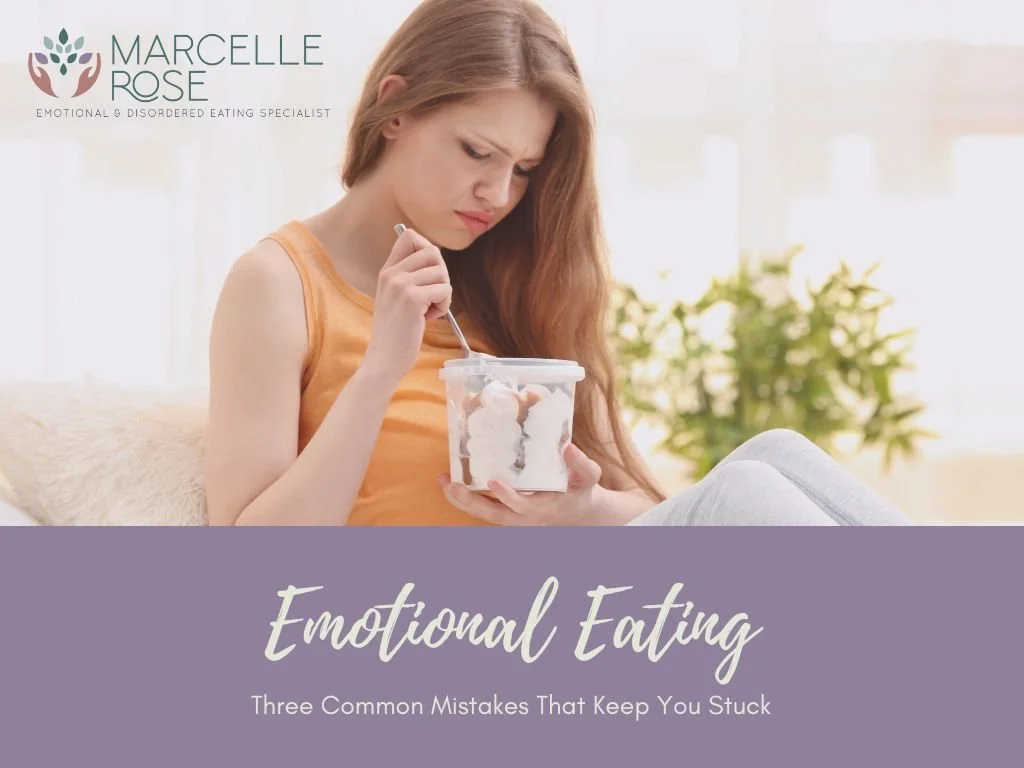
If you emotionally eat, you'll know its not necessarily about satisfying physical hunger. Often it's a way to find comfort or numb difficult feelings. While emotional eating is a natural part of the human experience, it can become problematic when it becomes your only coping mechanism and leads to guilt, shame, and a sense of losing control.
Many people trying to break free from emotional eating unknowingly fall into three common traps that keep them stuck:
1. Believing Emotional Eating Is Always a Problem
Contrary to popular belief, emotional eating isn’t inherently bad. Food is deeply tied to emotions and culture -think of birthday cakes, holiday feasts, and sharing meals with loved ones. Eating for pleasure or connection is natural and can be part of a balanced relationship with food.
However, when emotional eating becomes the default way to cope with distress, it can lead to a cycle of guilt and self-judgment. Instead of berating yourself for eating emotionally, approach it with curiosity and self-compassion.
Emerging research shows that self-compassion can be a powerful tool for change. Studies have found that people who respond to stress with greater self-compassion experience fewer food cravings and are less likely to engage in emotional or overeating patterns. Self-compassion also appears to buffer the link between difficult emotions and eating behaviours, helping to reduce the intensity of the cycle.
Recognising that food can provide comfort at times, but shouldn’t be the only tool in your emotional toolkit, helps shift the focus from guilt to awareness.
2. Falling into All-or-Nothing Thinking
"All-or-nothing" thinking is a common cognitive distortion that can make emotional eating worse. This mindset sees food choices as either completely good or bad, often leading to a cycle of restriction and overeating. For example, you might think, I've already eaten something "unhealthy," so I may as well keep going. When food rules are rigid, breaking them can feel like failure, which often leads to the familiar “I’ve blown it” response.
Psychologists often refer to this as ‘dichotomous thinking’ and research has consistently shown that this type of thinking is strongly linked to binge eating and loss of control around food.
Breaking free from this pattern means challenging rigid food rules and embracing a more flexible approach. In fact, studies also show that flexible thinking around eating is associated with greater stability and fewer episodes of overeating.
Emotional eating doesn’t define you, and one moment of eating for comfort doesn’t mean you’ve failed. Developing self-awareness, recognising triggers, and using mindful eating strategies can help you build a more balanced relationship with food.
3. Using Dieting as a Quick Fix
A common response to an emotional eating episode is to start a new diet in an attempt to regain control. However, dieting often exacerbates the problem, reinforcing feelings of deprivation and increasing preoccupation with food. Approaches that focus on control or restriction often fail, because they don’t address the underlying drivers of emotional eating.
Instead of turning to dieting, take a step back and explore what led to the emotional eating episode. Were you feeling sad, lonely, anxious, or stressed? Were you tired, premenstrual, or struggling with body image concerns? By approaching the situation with curiosity rather than judgment, you can gain valuable insights and develop healthier ways to address your emotional needs.
Moving Forward
Overcoming emotional eating isn’t about eliminating it entirely but understanding it and developing a more compassionate and balanced approach to food and emotions. By shifting your perspective, challenging unhelpful thought patterns, and exploring alternative coping strategies, you will be well on your way to breaking free from the cycle and building a healthier relationship with food.
If you’re ready to break free from emotional or binge eating, my book The Binge Freedom Method™ is for you! It’s packed with practical tools, insights, and a proven four-pillar framework to help you heal your relationship with food and your body.
👉 Find out more or grab your copy here.
Or, if you'd prefer a more personal chat about working together, book a free call [HERE] to explore how I can help.